



How To Get To Wimbledon: Best Tube, Rail, Shuttle Bus & Walking Routes During The Championships
Written by Aviran Zazon
Getting to Wimbledon during The Championships is not difficult in theory, but it is one of those London journeys where the final mile matters more than the route shown on your app.
The All England Club is close to several stations, yet no single station is perfect for every spectator.
For most visitors with tickets, the simplest route is the District line to Southfields, followed by the walk to the Grounds. For people arriving by National Rail, tram or from south-west London, Wimbledon station is often more useful, especially because it gives you the option of walking, taking the shuttle bus or using local transport onwards.
The best choice depends on what kind of Wimbledon day you are planning. A Centre Court ticket holder arriving for a reserved seat can build in a calmer morning.
Someone joining The Queue needs to think about official Queue status, first transport, weather, walking distance and whether it is still worth travelling before setting off.
Centre Court and No.1 Court
In Short: The Best Way To Get To Wimbledon
For most spectators, the best Tube station for Wimbledon is Southfields. It is on the District line, the walking route is familiar to regulars, and during The Championships the flow of spectators, signage and stewarding make it a straightforward approach.
Wimbledon station is better if you are arriving by National Rail, especially from London Waterloo, or if you want the shuttle bus rather than a full walk. It is also useful for visitors who want cafés, shops or toilets before heading up towards the Grounds.
For The Queue, do not simply travel to SW19 and hope for the best. Wimbledon’s official Queue guidance for 2026 says the Queue opens at 2pm on Sunday 28 June and advises spectators not to arrive before then. It also tells visitors to check Queue status before travelling.
Driving is rarely the best default. Public transport, walking and shuttle buses are usually more realistic unless you have pre-booked parking, accessibility arrangements or debenture-holder instructions.
The Two Main Wimbledon Routes: Southfields vs Wimbledon Station
The two main arrival routes are Southfields and Wimbledon station. They are both sensible, but they suit different kinds of visitors.
Southfields feels more like the classic Tube route to the tennis. It is not a large station, so it can feel busy at tournament peaks, but the advantage is simplicity. Just get off the District line, join the spectator flow and walk.
Wimbledon station gives you more transport options. It has National Rail, District line and tram connections, and it is particularly useful for people travelling from Waterloo, Surrey or south-west London. The trade-off is that the walk is longer and can feel more tiring because parts of it are uphill.
| Route | Best For | Typical Walk | Main Advantage | Main Downside |
|---|---|---|---|---|
| Southfields station | Most Tube users and first-time visitors | Around 15–16 minutes in normal walking conditions | Simple, obvious spectator route | Crowded at peak times; District line disruption can matter |
| Wimbledon station | National Rail, tram users, shuttle-bus users | Around 20–25 minutes on foot | Better connected; shuttle and town-centre facilities | Longer, hillier walk |
| Wimbledon Park station | Some Queue/local approaches | Often less direct than it looks | Useful for those who know the area | Not always the most practical choice for first-timers |
The key point is that the closest-looking station on a map is not always the most useful. Route geometry, crowd management, entry points and walking conditions all matter during The Championships.
Walking From Southfields Station
Southfields is the route many regulars recommend because it keeps the day simple. You arrive on the District line, leave the station with the crowd and follow the walking route towards the All England Club.
In normal conditions, the walk is often described as about 15–16 minutes, but that does not mean you should allow only 16 minutes from train doors to your seat.
During tournament fortnight you may be moving with crowds, waiting at crossings, following stewarded routes, finding the correct gate and going through security.
A more realistic allowance for first-time visitors is 25–40 minutes from arriving at Southfields to being comfortably inside the Grounds, depending on the time of day, the gate you need and how busy the approach is.
Southfields works especially well if you are travelling light, happy to walk and arriving at a conventional spectator time. It is less appealing if you dislike crowded platforms, are travelling with very young children, have mobility concerns or are leaving late after a major Centre Court match.
Walking From Wimbledon Station
Wimbledon station is sometimes underrated because it is not the closest-feeling route. For many visitors, though, it is the most practical arrival point.
If you are coming from London Waterloo, direct trains to Wimbledon can be quick and frequent. Trainline’s journey information lists London Waterloo to Wimbledon as taking as little as 13 minutes, with fares from around $8 in its published data, though live prices should always be checked for the date and time of travel.
The walking route from Wimbledon station is longer than Southfields and parts of it are uphill. That matters more than it might sound. Wimbledon can be a long day, especially if you arrive early, walk around Wimbledon’s outside courts, queue for food, climb in and out of seats, and then leave after a late finish.
The upside is that Wimbledon town gives you a more flexible start. You may find it easier to buy supplies, use station facilities or pause before heading to the Grounds. Some spectators also prefer walking back to Wimbledon station after play if Southfields looks especially crowded.
The Wimbledon Shuttle Bus
The shuttle bus is the main reason Wimbledon station remains so useful for spectators who do not want to walk the whole way.
Wimbledon’s official visitor guidance highlights public transport and local bus links, including the 493 service connecting Wimbledon station and Southfields with the Wimbledon site. Wimbledon’s accessibility information also confirms dedicated Championships bus services during the event, with services using Car Park 1 on Somerset Road.
The dedicated Championships shuttle is particularly useful for visitors arriving by National Rail, older spectators, families, people carrying bags, or anyone trying to save energy before a full day on site. Recent published information in the research pack puts shuttle fares in the range of a few pounds each way, but exact 2026 prices should be checked against Wimbledon’s current Getting Here guidance before travel.
The shuttle is not always automatically faster once you include waiting time, boarding queues and event traffic. Its real value is comfort and energy-saving rather than guaranteed speed.
Best Route For Different Wimbledon Visitors
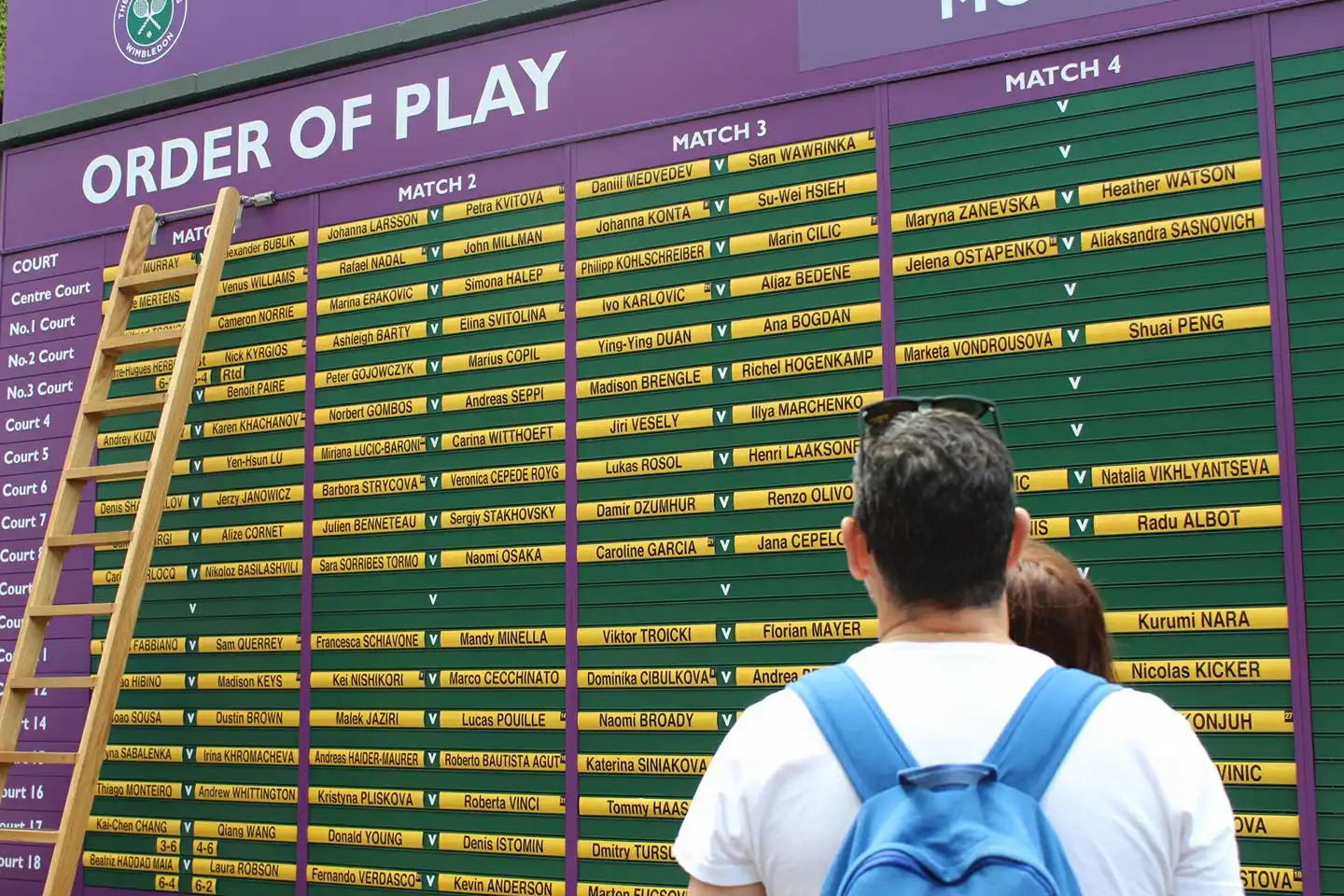
Different Wimbledon visitors should plan different journeys. The mistake is assuming that everyone is having the same day.
| Visitor Type | Best Route Thinking |
|---|---|
| Queue campers | Check official Queue status first; plan around Wimbledon Park access and early transport limits |
| Grounds Pass visitors | Arrive early, favour Southfields if using the Tube, and allow time for entry queues |
| Centre Court ticket holders | Southfields is simple, but Wimbledon station plus shuttle can make sense if preserving energy |
| No.1 Court ticket holders | Similar to Centre Court, with enough margin for security, food and grounds movement |
| Families | Wimbledon station plus shuttle may be easier than a crowded Tube-and-walk approach |
| Older visitors | Prioritise step-free access, shuttle options and reduced walking over theoretical fastest routes |
| Late-evening departures | Stay flexible; Southfields may be crowded after major matches, so Wimbledon station can be a useful alternative |
For Queue visitors, transport is not just about how to reach Wimbledon. It is about whether the journey is still worth making. If the Queue is already extremely busy or the official status advises against travelling, the best route may be not setting off at all.
Leaving Wimbledon After Major Matches
Leaving Wimbledon can feel very different from arriving. Morning arrivals are staggered because some people come for the Queue, some for grounds opening, some for outside courts and some for Centre Court.
Evening departures can bunch together after a major Centre Court match, especially if a high-profile match finishes late.
Expect crowd surges around gates, walking routes and stations. Southfields can be the obvious Tube choice, which also means it can become the obvious pressure point. Wimbledon station may involve a longer walk, but it gives you National Rail and other onward options.
The best advice is to avoid planning your journey around the final possible connection. Build in patience, check live transport status and consider waiting for the first wave of the crowd to move if you are not in a hurry.
Should You Drive Or Use Taxis?
Driving to Wimbledon during The Championships is usually more hassle than it is worth unless you have a specific parking arrangement or accessibility need.
Wimbledon’s visitor information points spectators towards public transport, and the event operates in a heavily managed residential area. Official and local arrangements can include controlled parking, road restrictions, shuttle movements, taxi management and post-play crowd control.
Taxis and rideshares can help in specific situations, especially early in the morning, for visitors with mobility needs or for people being dropped near a managed access point.
They are less reliable as a general plan after play, when roads are busy and demand spikes.
Wimbledon debenture holders or hospitality guests should follow the instructions attached to their ticket or package rather than relying on generic transport advice. Those instructions may include a different approach, parking or drop-off details.
Practical Mistakes First-Time Visitors Make
The biggest mistake is treating Wimbledon like a normal Tube trip. It is still London public transport, but the final part of the journey is shaped by crowds, weather, walking routes, gates and security.
Here are the common errors to avoid:
- Wearing smart but uncomfortable shoes, per the Wimbledon dress code
- Assuming Wimbledon station is automatically the best station
- Leaving no margin for the walk from Southfields
- Travelling to The Queue without checking its live status
- Assuming rideshares will be easy after play
- Forgetting that the walk from Wimbledon station is partly uphill
- Relying on the last possible train home
- Packing for sunshine but not rain, or rain but not heat
A visitor thread like this is useful because it shows how much of the Wimbledon journey is about practical judgement rather than simply choosing a station.
Tips for travelling to Wimbledon? by u/MrWilly97 in wimbledon
The practical takeaway is simple: do not rely only for the fastest journey planner result. Plan for the whole day, including the walk, the queue at entry, weather, energy levels and the journey home.
Best Times To Travel
For a full Wimbledon day, arriving earlier is usually better, especially during the first week when the order of play is concentrated more around the grounds and more people trying to make the most of their ticket.
Grounds normally open at 10am, outside-court play starts from 11am, No.1 Court play begins at 1pm and Centre Court play begins at 1.30pm. That means a grounds-focused visitor has a stronger reason to arrive early than someone only planning to watch a match with show court tickets.
A midday arrival can work well for reserved-seat holders who are not trying to see practice courts, shop, eat early or explore the Grounds. Late-afternoon arrivals can be calmer in some respects, but they give you less room for transport disruption and less time to enjoy the wider Wimbledon experience.
Leaving before the end of Centre Court play can make the journey easier, but it may also mean missing the best part of the day. Leaving after the final match requires patience rather than panic.
2026 Travel Costs To Keep In Mind
For many visitors travelling from central London, Southfields and Wimbledon fall into Zone 3, so the Zone 1–3 daily cap is often the relevant benchmark.
TfL’s 2026 fare information says pay-as-you-go caps and Travelcard prices are frozen until 2027, while bus and tram fares are frozen at $2 until 5 July 2026.
That timing matters because Wimbledon 2026 runs from 29 June to 12 July. The first week falls within the published bus and tram freeze period, while visitors travelling in the second week should check current TfL pricing closer to the day. Wimbledon’s official dates page confirms the 2026 tournament window.
The Hopper fare also remains useful as it allows unlimited bus and tram journeys within one hour of first touching in for $2, provided you use the same card or device.
How To Get To Wimbledon | FAQs
What Is The Best Station For Wimbledon?
For most Tube users, Southfields is the best station because it gives you the simplest walk to the Grounds and is widely used by spectators during The Championships. Wimbledon station is better if you are arriving by National Rail, using the tram network, or want the shuttle bus instead of walking all the way.
Should You Go To Southfields Or Wimbledon Station?
Choose Southfields if you want the standard Tube-and-walk route. Choose Wimbledon station if you are coming from Waterloo or south-west London, need shops or facilities before heading up, or prefer the shuttle bus. Southfields is simpler; Wimbledon station is better connected but usually involves a longer, hillier walk.
How Long Is The Walk From Southfields Station To Wimbledon?
The Southfields walk is usually around 15–16 minutes in normal conditions, but spectators should allow longer during The Championships. With crowds, stewarding, crossings, security and gate-finding, first-time visitors should think in terms of 25–40 minutes from arriving at Southfields to being settled inside the Grounds.
Is The Wimbledon Shuttle Bus Worth Using?
The shuttle bus is worth considering if you arrive at Wimbledon station by train, want to avoid the uphill walk, are travelling with family, or need to conserve energy for a long day. It may not always be faster once queues and traffic are included, but it can make the final stretch easier.
Can You Drive To Wimbledon During The Championships?
Driving is rarely the best plan unless you have pre-booked parking, accessibility arrangements or specific ticket-holder instructions. The Championships bring road restrictions, controlled local parking and heavy demand around the Grounds, so public transport, walking and shuttle buses are usually more reliable for most spectators.
What Is The Best Route For Wimbledon Queue Visitors?
Queue visitors should check official Queue status before travelling. If the Queue is viable, Southfields is often the simplest Tube approach, while some early-morning visitors may need taxis or drop-off planning before public transport starts. The Queue is different from a normal ticket-holder arrival and needs its own plan.
What Time Should You Arrive At Wimbledon?
For Grounds Passes and outside-court-heavy days, earlier is usually better because play starts on the outside courts before the show courts. Reserved Centre Court or No.1 Court ticket holders have more flexibility, but should still allow time for transport, walking, security, food and moving around the Grounds.
What Should You Do If The District Line Is Disrupted?
Have a backup route via Wimbledon station. National Rail services from Waterloo to Wimbledon can be a strong alternative, after which you can walk, use the shuttle bus or take local transport. Check TfL and National Rail before setting off, especially on busy tournament mornings and late evenings.
The Best Wimbledon Route Is The One That Fits Your Day
The easiest answer is that Southfields is usually the best Tube station for Wimbledon, while Wimbledon station is the best all-round choice for National Rail, trams, shuttle buses and visitors who want more flexibility.
The more useful answer is that your route should match your ticket, your arrival time and your tolerance for walking.
Queue visitors need live information before travelling. Grounds Pass holders benefit from arriving early. Centre Court and No.1 Court ticket holders can be more relaxed, but still need to respect the final mile.
Families, older visitors and anyone travelling long distances may prefer the shuttle from Wimbledon station rather than treating the walk as a small detail.
Plan the whole day, not just the train journey. Wear comfortable shoes, check live transport, allow more time than your app suggests and be patient when leaving after a major match.
And if the uncertainty of The Queue or same-day access makes the journey feel too risky, Ticket-Compare.com can help you compare available Wimbledon ticket options before committing to travel.
Today there are 1,841 Wimbledon tickets on sale via Ticket-Compare.com.
Related Articles:
How to buy Centre Court tickets for Wimbledon
How to buy No.1 Court Wimbledon tickets


