

 English










Wimbledon Traditions Explained: The Customs That Make The Championships Unique
Written by Aviran Zazon
Wimbledon feels different because its traditions are not tucked away in the background. They shape the way the tournament looks, sounds and moves from the moment spectators arrive in southwest London.
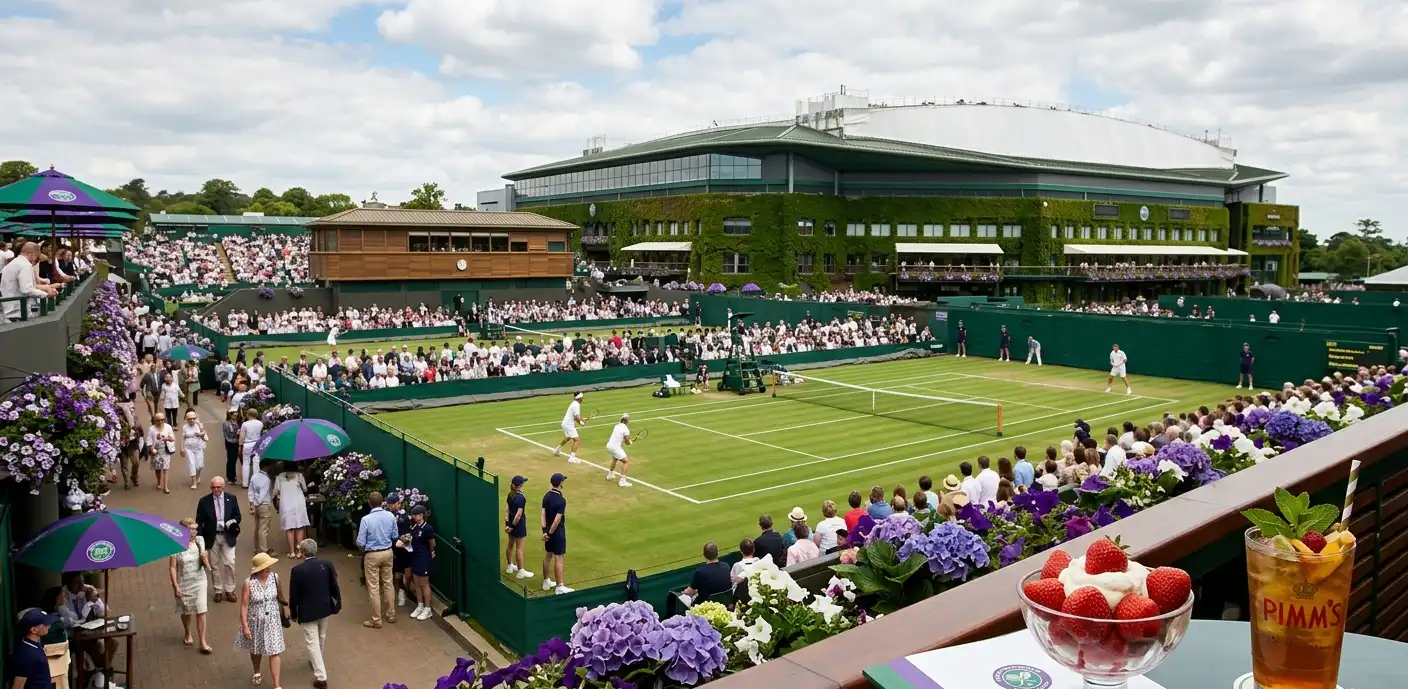
The all-white clothing rule, grass courts, strawberries and cream, The Queue, the Royal Box, understated branding, Centre Court etiquette and the shared atmosphere on Henman Hill or Murray Mound all help make The Championships feel unlike the Australian Open, Roland-Garros or the US Open.
Some of these customs are formal rules. Others are spectator habits, food rituals, player routines or long-standing symbols that have become part of Wimbledon folklore. But the interesting thing is that Wimbledon is not frozen in the past.
It has added roofs, electronic line calling, app-based tickets, video review and a permanent 14-day schedule while still presenting itself as tennis’s most traditional major.
Centre Court and No.1 Court
In Brief: What Traditions Make Wimbledon Unique?
The most famous Wimbledon traditions are the all-white player dress code, grass courts, strawberries and cream, The Queue, the Royal Box, bowing and curtsying etiquette, Henman Hill or Murray Mound, quiet court behaviour, low-key branding, famous towels and the formal Centre Court trophy ceremonies.
Some are official rules. The all-white clothing requirement is a player rule, and court etiquette is actively managed by stewards. Others are cultural customs, such as eating strawberries and cream, drinking Pimm’s on the grounds, joining The Queue, buying a towel or sitting on The Hill to watch Centre Court on the big screen.
| Wimbledon tradition | What visitors notice | Rule or custom? | Why it matters |
|---|---|---|---|
| All-white clothing | Players appear in almost entirely white kit | Formal player rule | Gives Wimbledon its distinctive on-court look |
| Grass courts | Low bounce, fast movement, green setting | Sporting tradition | Links Wimbledon to lawn tennis history |
| Strawberries and cream | A simple summer dessert sold around the grounds | Food custom | Gives all visitors a recognisable ritual |
| The Queue | Fans wait for same-day ticket access | Officially managed ticketing tradition | Keeps a public route into the tournament |
| Royal Box | Invited guests seated on Centre Court | Formal ceremonial tradition | Adds pageantry and status to Centre Court |
| Bowing or curtsying | Rare now, but still part of Wimbledon etiquette | Evolved protocol | Shows how old traditions have softened |
| Henman Hill / Murray Mound | Big-screen watching on the grass | Spectator custom | Lets Grounds Pass visitors share show-court drama |
| Understated branding | Less visual clutter around courts | Presentation tradition | Helps Wimbledon look instantly recognisable |
| Towels and souvenirs | Players and fans using Wimbledon merchandise | Folklore and retail custom | Extends the tournament’s identity beyond the court |
| Electronic line calling | Automated calls instead of line judges | Modern operational change | Shows tradition adapting to accuracy and technology |
Why Wimbledon Is Seen As The Most Traditional Grand Slam
Wimbledon is widely seen as the most traditional Grand Slam because it has preserved more of its original identity than the other majors. It is the oldest of the four, remains rooted in grass-court tennis, keeps a formal club atmosphere and uses restraint as part of its presentation.
The visual language is unusually consistent: green surrounds, white clothing, purple-and-green detailing, clipped lawns, floral borders and relatively quiet courtside advertising. Even a casual viewer can recognise Wimbledon from a few seconds of footage.
That continuity matters emotionally. Fans do not just watch a tennis tournament; they watch a version of summer that returns each year with familiar signals.
The same customs repeat often enough to become personal rituals, whether that means queuing overnight, walking from Southfields, finding a spot on The Hill, buying strawberries and cream, or watching the final trophy ceremony on Centre Court.
Wimbledon’s traditions also carry tension. Some feel charming, some feel exclusive, some are inconvenient, and some have already changed. The former Middle Sunday rest day disappeared from 2022 as Wimbledon became a permanent 14-day tournament, ending the old rhythm that created Manic Monday.
That is why Wimbledon is best understood as a tournament that changes carefully rather than a tournament that never changes.
The All-White Clothing Rule
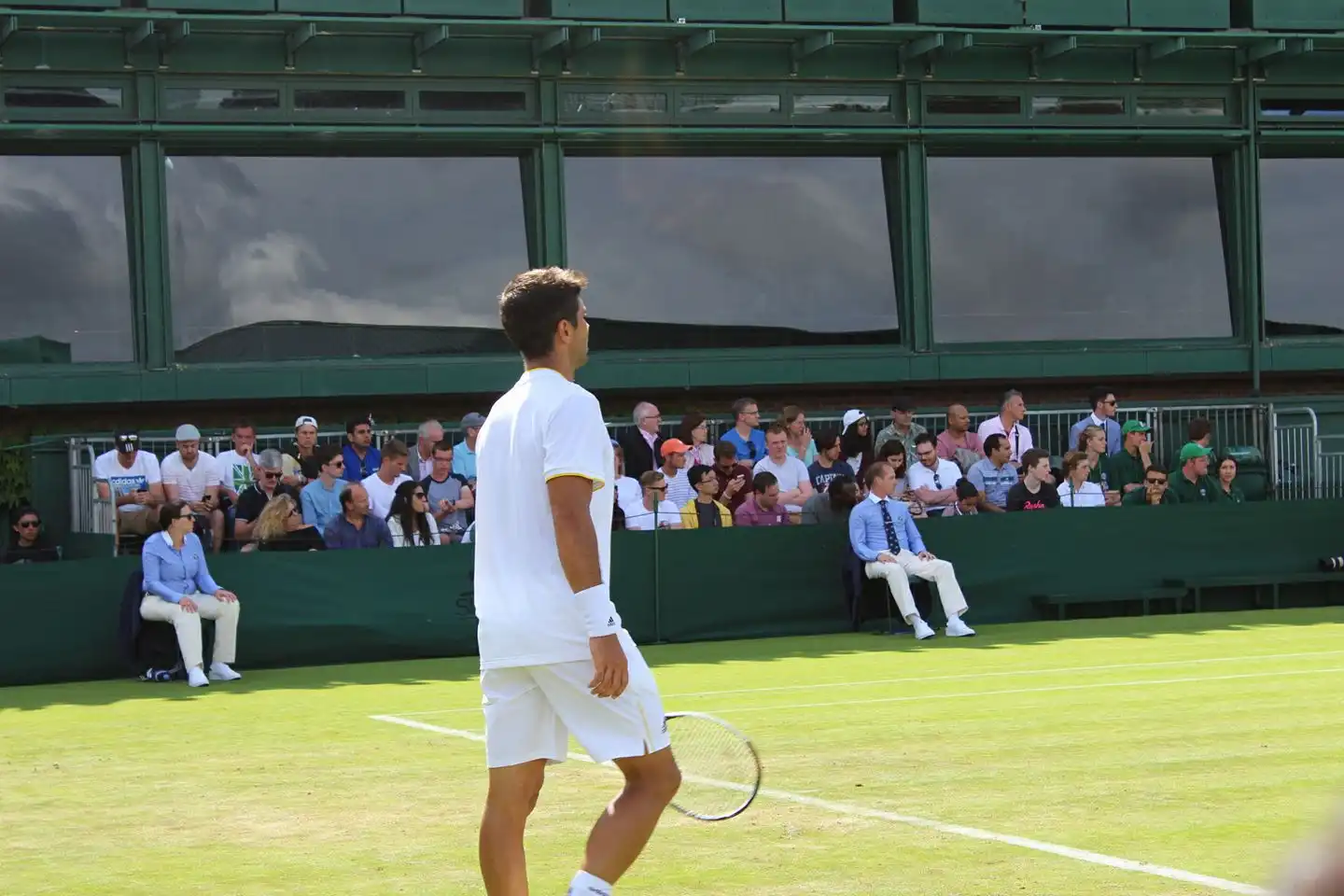
The all-white Wimbledon dress code is probably Wimbledon’s most recognisable player-facing tradition. Wimbledon’s official clothing rules require competitors to wear suitable tennis attire that is almost entirely white from the moment they enter the court area.
That detail is important. The rule is not just about match play. It applies to the visible court environment around the player, including warm-ups. The effect is powerful because every player, regardless of personality, sponsor or ranking, is folded into the same Wimbledon aesthetic.
The tradition is usually linked to older ideas of tennis club etiquette, propriety and the desire to hide sweat. In modern terms, it works as branding by restraint. Wimbledon reduces colour, reduces visible individual commercial expression and lets the grass, white clothing and court surrounds define the image.
The rule is strict, but not completely immovable. From 2023, Wimbledon allowed female players to wear dark undershorts, a change introduced after players raised concerns about competing while menstruating. That adjustment shows how Wimbledon traditions can evolve when a rule starts to clash with comfort, dignity or common sense.
For spectators, the key point is simpler. Ordinary visitors do not have to wear white. Many people dress smartly because the event has a polished atmosphere, especially around Centre Court, debenture areas and hospitality spaces, but comfortable shoes, layers, sun protection and rain readiness matter far more than trying to copy the players.
Strawberries And Cream
Strawberries and cream is Wimbledon’s most famous food tradition because it is simple, seasonal and easy for almost every visitor to join in. You do not need a Centre Court ticket or a hospitality package to take part in it. A Grounds Pass visitor can still buy the dessert and feel part of the same ritual.
The tradition is closely tied to the English summer and is often traced back to Wimbledon’s earliest years. Its strength is partly symbolic: the dish photographs well, feels light enough for a long day outdoors and has become shorthand for being at The Championships.
It is also a large-scale operation. Reuters reported that Wimbledon expected to serve around 2.5 million strawberries with 13,000 litres of cream in 2025, with strawberries and cream priced at $4 per serving after the first price rise since 2010. The favoured Malling Centenary strawberries were supplied daily by Hugh Lowe Farms in Kent.
That contrast is part of the appeal. Strawberries and cream feels quaint, but delivering it across a fortnight requires precise sourcing, ripeness control, staffing and distribution. Wimbledon turns a simple dessert into a managed ritual on a huge scale.
Pimm’s, Picnics And Wimbledon Food Culture
Pimm’s is not a formal Wimbledon rule in the way the dress code is, but it has become part of the fan imagination around the tournament. It sits in the same cultural cluster as strawberries, sunshine, picnic rugs, deckchairs, The Hill and long afternoons around the grounds.
Food at Wimbledon is not just a side detail. For many visitors, especially those with Grounds Passes, the day is a mixture of tennis, walking, waiting, eating, drinking and watching screens. The tournament can feel less like a single-session event and more like a garden-based day out.
The 2025 Ticket Holders’ Handbook listed restaurants, bars, cafés, takeaway options and classic Wimbledon food points around the grounds, with strawberries and cream, Pimm’s, coffee, champagne, shops and picnic areas all forming part of the visitor map. It also noted free water refill points and encouraged guests to keep hydrated.
That last point matters. Pimm’s and sunshine may sound like the perfect Wimbledon pairing, but visitors should be practical. The Queue, outdoor courts and The Hill can involve long periods in heat or rain, so water, shade, layers and realistic pacing are part of enjoying the tradition rather than just enduring it.
The Royal Box And Wimbledon’s Royal Connection
The Royal Box is Wimbledon’s most formal tradition. It sits on Centre Court and has been used to entertain friends and guests of Wimbledon since 1922. The dark green Lloyd Loom wicker chairs have become an important part of the visual identity of the Royal Box..
The Royal Box is not only about royalty. It is an invitation-led area associated with senior royals, former champions, figures from public life, sport, culture, media and other invited guests. Its presence gives Centre Court a ceremonial tone before the tennis even begins.
This is one of the traditions that makes Wimbledon feel hierarchical and club-like. Some fans love the pageantry while others see it as a symbol of exclusivity. Both readings can be true. The Royal Box adds glamour and continuity, but it also reminds visitors that Wimbledon’s traditions are not all equally democratic.
Do Players Still Bow Or Curtsy At Wimbledon?
Bowing and curtsying at Wimbledon has changed over time. Historically, players were expected to bow or curtsy towards the Royal Box when members of the Royal Family were present on Centre Court. That expectation was discontinued in 2003.
Today, the tradition is far more limited. Players are generally only required to bow or curtsy if the monarch or the Prince of Wales is present, although players may still make a respectful gesture in other ceremonial moments. The important point is that players do not bow or curtsy every time they walk on Centre Court.
This is a useful example of Wimbledon softening a tradition rather than erasing it completely. The gesture still belongs to the tournament’s folklore, but it no longer governs every royal appearance in the same way.
Wimbledon traditions are often debated by tennis fans, especially when older customs meet modern expectations.
Wimbledon traditions: what should change and why? by u/jamiedobbs__ in tennis
That debate is part of the modern Wimbledon story. The tournament’s customs are not just passively admired. They are questioned, defended, adjusted and reinterpreted by players, spectators and fans watching from elsewhere.
The Queue
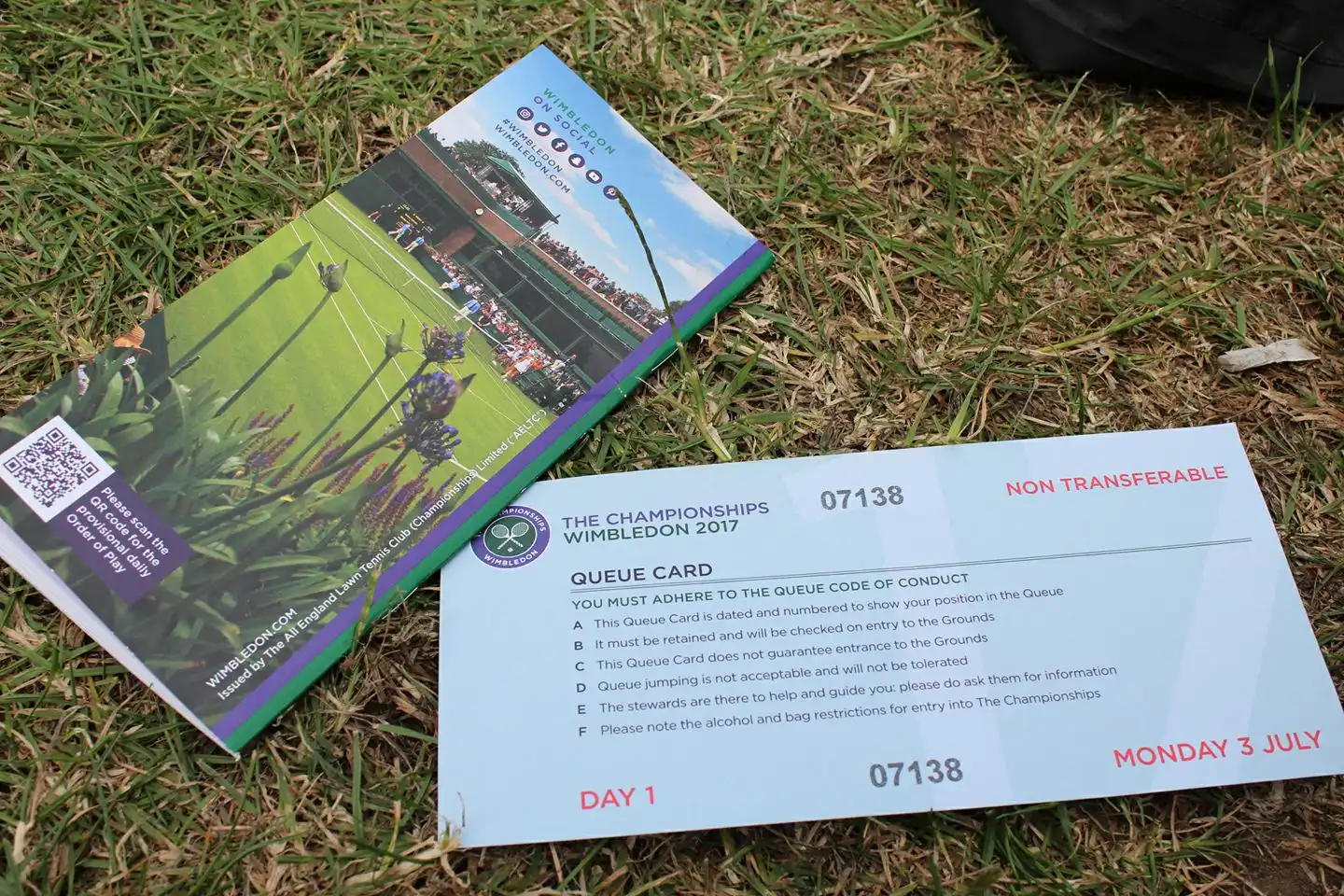
The Queue is one of the most distinctive ticketing traditions in world sport. It is not merely a line outside a venue. It is an organised ritual that lets fans seek same-day access to Wimbledon, often after a long wait in Wimbledon Park.
For 2026, The Queue will open at 2pm on Sunday 28 June 2026, and visitors are told not to arrive before that time.
The Queue is unique because it preserves a public route into a high-demand global event. In an age of digital ballots, mobile tickets, premium packages and online resale, Wimbledon still maintains a visible, human, first-come-first-served tradition.
It can be charming. Fans bring food, make friends, camp overnight and treat the wait as part of the experience. It can also be hard work. Heat, rain, capacity limits and uncertainty can make it physically demanding, especially during the first week when demand is high.
The best way to understand The Queue is as both romance and logistics. It has camaraderie and folklore, but it also requires preparation: water, sun cream, layers, patience, a manageable bag and a willingness to accept that same-day access is never entirely guaranteed.
Henman Hill, Murray Mound And Grounds Culture
The Hill is Wimbledon’s unofficial living room. It lets fans without Centre Court tickets watch major matches on a big screen while sitting on the grass, often with food, drinks and a crowd that reacts together.
Its nicknames change with British tennis history. Henman Hill became famous during Tim Henman’s Wimbledon runs. Murray Mound grew naturally during Andy Murray’s era. Other names appear from time to time, but the underlying tradition stays the same: a shared outdoor space where people without the best seats can still feel connected to Centre Court.
For Grounds Pass visitors, The Hill can be one of the best parts of the day. It gives structure to a visit when outer-court play slows down, rain interrupts the schedule or a big British player is on a show court.
It is also evolving. Wimbledon has been preparing improvements to The Hill after the 2026 Championships, with better accessibility and viewing in mind for the 150th anniversary year in 2027. That makes it another example of tradition being redesigned rather than removed.
Grass Courts And The English Garden Feeling
Grass is the foundation of Wimbledon’s identity. The tournament remains the only Grand Slam played on grass, keeping it tied to the original lawn tennis tradition in a way the other majors no longer are.
The surface affects the tennis itself. Grass tends to reward movement, balance, quick reactions and lower-bouncing shots. It also changes the sound and rhythm of matches. Players slip, adjust and move differently from the way they do on clay or hard courts.
For spectators, grass does something even broader. It gives Wimbledon its garden feeling. The clipped lawns, floral borders, green backdrops, ivy and restrained signage make the venue feel less like a standard arena and more like a private club temporarily opened to the world.
Wimbledon’s official grass-court information notes the intensity of court maintenance, including daily mowing, rolling and relining during The Championships. This is tradition as craftsmanship: the surface looks natural, but it is maintained with extraordinary precision.
Understated Branding And Wimbledon’s Visual Identity
One of Wimbledon’s most powerful traditions is what it leaves out. Compared with many major sporting events, Wimbledon courts are not overwhelmed by loud advertising, bright commercial boards or constant entertainment noise.
That restraint makes the tournament instantly recognisable. White clothing, green grass, purple-and-green details, polished court furniture, ball boys and ball girls, flowers and clean sightlines all contribute to the feeling that Wimbledon is carefully staged rather than aggressively sold.
This does not mean Wimbledon has no commercial partners. The grounds include partner activations, branded experiences and retail areas. The difference is in presentation. The Wimbledon show courts still preserve a visual calm that helps the tennis remain the focus.
For first-time visitors, this can be one of the more surprising traditions. Wimbledon may be a global sports property, but it often looks less commercially cluttered than smaller events.
Towels, Trophies, Souvenirs And Player Rituals
The Wimbledon towel is one of the tournament’s smaller but most recognisable traditions. Players use the towels on court, broadcasters show them in close-up, and fans buy them as souvenirs. Over time, the towel has become part of the visual grammar of Wimbledon.
Souvenir culture matters because it lets visitors take the tournament home. A towel, cap, pin badge, programme or purple-and-green item becomes proof of attendance. For international fans especially, visiting the shop is often part of the day’s ritual.
The trophies carry a deeper ceremonial weight. The singles finals are not just matches; they are formal endings to the fortnight. Centre Court, the Royal Box, the champion’s walk, the photographs and the speeches all help turn the finals into ritual theatre.
Player routines add another layer. The walk to court, the white clothing, the careful silence before points, the ball boys and ball girls, the chair umpire’s voice and the absence of line judges from 2025 all shape how Wimbledon looks and feels as a performance.
Tradition And Modernisation
Wimbledon’s traditions survive because the tournament is willing to modernise when pressure becomes too strong. It does not change casually, but it does change.
The Centre Court roof, opened in 2009, transformed the old rain-delay rhythm. No.1 Court later gained its own roof in 2019, meaning the biggest stages can continue when outer courts stop. The 11pm curfew, introduced with the Centre Court roof, reflects Wimbledon’s location in a residential area and the need to balance late play with local residents and transport.
The end of Middle Sunday as a rest day also changed the tournament’s rhythm. From 2022, Wimbledon became a full 14-day event, spreading matches more evenly and ending the old Manic Monday pattern.
The biggest recent visual change is electronic line calling. Wimbledon introduced live electronic line calling in 2025, removing line judges from the tournament for the first time in its modern history. For 2026, Wimbledon is adding video review technology on six show courts, allowing players to review certain umpire judgement calls such as not-up (double bounce), foul shot and touch decisions.
Digital tickets are now part of the visitor experience too. Wimbledon states that ticket holders require the official app to display mobile tickets on entry to the Grounds and courts, along with photo ID.
These changes do not make Wimbledon less traditional. They show how carefully the tournament now manages the tension between heritage, fairness, security, accuracy and visitor convenience.
Which Wimbledon Traditions Will Spectators Notice Most?
A visitor’s Wimbledon traditions depend heavily on the ticket they hold.
Grounds Pass visitors are most likely to notice The Queue, the walk from Southfields or Wimbledon Station, outer-court etiquette, food stalls, strawberries and cream, The Hill, shops, practice-court glimpses and the general garden atmosphere.
Centre Court ticket holders will feel the formal side more strongly with the Royal Box, the roof, the trophy boards, the quiet between points, the sense of ceremony and the sharper contrast between Wimbledon’s old rituals and modern broadcast technology.
No.1 Court ticket holders get a similar show-court experience, with the benefit of a roof and high-profile matches, while still being close to the bustle of Parkside, food areas, shops and the Ticket Resale Kiosk.
Families and first-time visitors often notice practical traditions more than ceremonial ones like when they can move in and out of courts, where to refill water, how long the walking routes feel, where to sit on The Hill and how much of the day happens away from the match they originally planned to watch.
Debenture and hospitality guests may experience Wimbledon through premium seating, lounges, dining and more comfortable access, but the wider traditions remain visible. The all-white clothing, grass courts, Royal Box, polished service, restrained branding and Centre Court atmosphere still define the day.
Wimbledon Traditions Explained | Frequently Asked Questions
What are the main Wimbledon traditions?
The main Wimbledon traditions include the all-white player dress code, grass courts, strawberries and cream, The Queue, the Royal Box, bowing and curtsying etiquette, Henman Hill or Murray Mound, quiet spectator behaviour, understated branding, famous towels, trophy ceremonies and the wider garden-party atmosphere around the grounds.
Why do players wear white at Wimbledon?
Players wear white because Wimbledon requires competitors to dress in suitable tennis attire that is almost entirely white from the moment they enter the court area. The tradition is linked to older tennis club etiquette and now works as one of Wimbledon’s strongest visual signatures.
Why are strawberries and cream associated with Wimbledon?
Strawberries and cream are associated with Wimbledon because they match the English summer setting and have been part of the tournament’s food culture for generations. The ritual remains popular because it is simple, photogenic and accessible to most visitors, not only premium ticket holders.
Do players still bow or curtsy at Wimbledon?
Players do not routinely bow or curtsy every time they enter Centre Court. The old expectation was discontinued in 2003. Today, bowing or curtsying is generally reserved for when the monarch or the Prince of Wales is present, although players may still make respectful gestures in ceremonial moments.
What is The Queue at Wimbledon?
The Queue is Wimbledon’s officially managed same-day ticketing tradition. Fans wait, often in Wimbledon Park, for the chance to access tickets or Grounds Passes. It is part ticket route, part endurance test and part cultural ritual, especially for visitors who want the classic public Wimbledon experience.
Why is Wimbledon played on grass?
Wimbledon is played on grass because it grew out of lawn tennis and has preserved that original surface while the other Grand Slams moved to clay or hard courts. Grass affects the speed, bounce, movement and visual identity of the tournament, making it central to Wimbledon’s character.
Why is there so little sponsor branding at Wimbledon?
Wimbledon’s visual restraint is part of its identity. Although the tournament has commercial partners, the show courts are presented with less obvious advertising than many major sporting events. That helps preserve the clean green-and-white look that makes Wimbledon instantly recognisable.
What modern changes has Wimbledon introduced?
Wimbledon has introduced major modern changes including roofs on Centre Court and No.1 Court, a permanent 14-day schedule from 2022, live electronic line calling from 2025, digital ticketing through the official app and video review technology on selected show courts from 2026.
Is there an official resale tradition inside Wimbledon?
Yes. Wimbledon has an on-site Ticket Resale Kiosk for returned show-court tickets, subject to availability. The official kiosk lists returned tickets after 3pm, with proceeds going to the Wimbledon Foundation. Prices listed for 2025 were $20 for Centre Court and $13 for No.1 Court and No.2 Court.
Do spectators have to follow a dress code at Wimbledon?
Most spectators do not have to follow a formal dress code, and they certainly do not have to wear white. The stricter clothing rule applies to players. Some Wimbledon hospitality areas and invited spaces may have their own expectations, but general visitors should prioritise comfort, weather readiness and practical footwear.
Why Wimbledon Traditions Still Define The Championships
Wimbledon remains unique because its traditions shape the whole experience rather than sitting on the surface as decorative history.
The clothes players wear, the grass they play on, the food spectators eat, the way fans queue, the silence during points, the Royal Box, The Hill, the towels, the trophies and the journey through southwest London all help create the feeling of The Championships.
The tournament has changed more than casual viewers sometimes realise. Middle Sunday has gone, roofs have altered rain delays, digital tickets shape entry, electronic line calling has replaced line judges and video review is arriving on selected show courts. Even so, Wimbledon still feels like Wimbledon because the surviving customs are so deliberate.
For readers who want to experience those traditions in person, the right ticket route depends on the kind of day they want. Some will prefer the grounds and The Hill, others will look for a show-court seat, debenture access or hospitality.
Ticket-Compare.com can help compare available Wimbledon ticket options across providers, but the real attraction is the same either way. Stepping into a tournament where tennis tradition is still part of the live event.
In realtime, there are thousands of Wimbledon tickets available via Ticket-Compare.com.
Related Articles:
Wimbledon Order of Play Explained


