

 English











What Is the Queue at Wimbledon?
Written by Aviran Zazon | Last updated on March 12, 2026
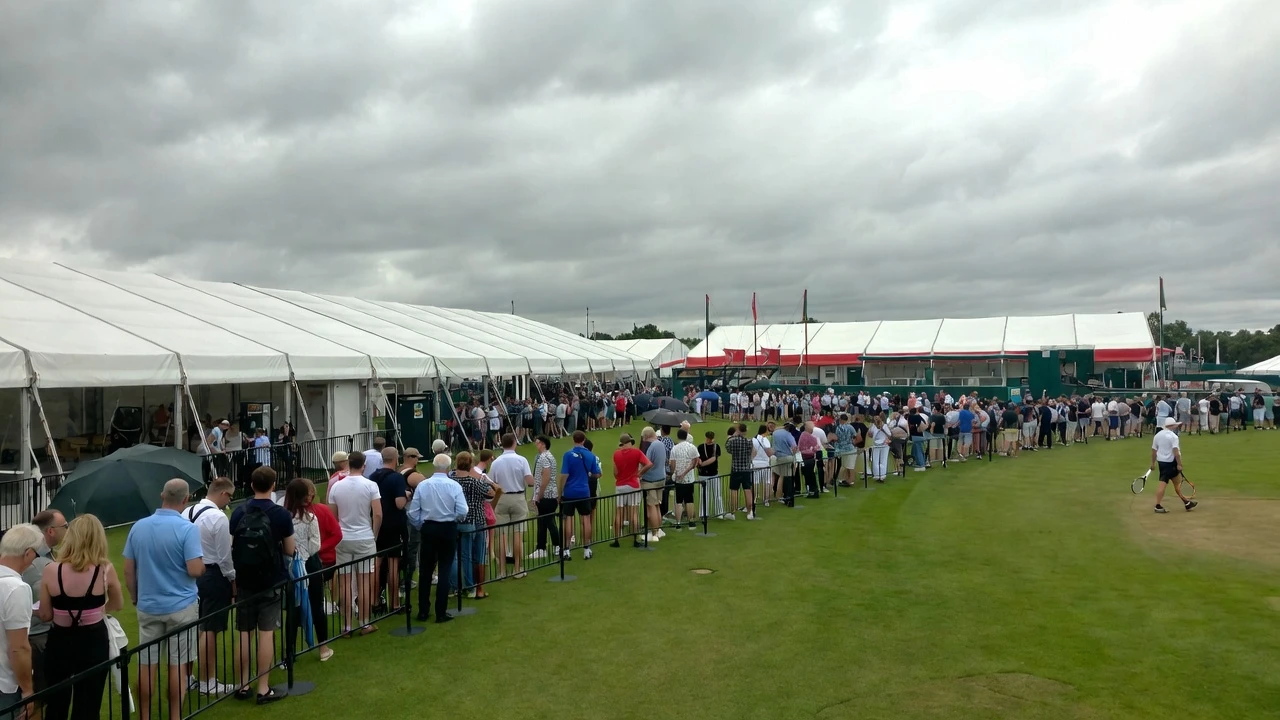
The Queue at Wimbledon is the Championships’ direct way to buy tickets on the day, rather than months in advance.
In simple terms, it is a stewarded line in Wimbledon Park where fans wait for a chance to buy either a limited number of show-court tickets or a Grounds Pass, with tickets sold on a best-available, one-per-person basis.
That is key because the Queue is still one of the best-known public routes into Wimbledon, yet it works very differently in practice from the romantic image many people have of it.
Your outcome depends on what day you go, what ticket you actually want, how early you arrive, how fast morning processing moves, and whether you are happy with a Grounds Pass if the show courts have already gone.
This guide explains how the Queue works, when it makes sense, what kind of access it gives you, what it costs, and when a reader may prefer the greater certainty of the resale market.
No Waiting Needed!
Fast Answer: How the Wimbledon Queue Works
The quickest way to understand The Queue is this:
- The Queue is Wimbledon’s official same-day ticket route in Wimbledon Park.
- It covers a limited allocation of Centre Court, No.1 Court tickets and No.2 Court seats, plus a much larger supply of Grounds Passes.
- Centre Court and No.2 Court queue tickets are available for the first 10 days only. No.1 Court has a limited queue allocation each day.
- People aiming for Centre Court on busy early-round days often arrive the day before, not at dawn on the day itself.
- If you mainly want a Grounds Pass, the Queue is much more forgiving, especially on quieter days.
- Once you are inside the Grounds, returned show-court tickets can go on sale from 3pm through Wimbledon’s official resale system, subject to availability.
- Late arrival can still work for Grounds entry, though it becomes a weaker option if you want a full day on site.
- Some readers still prefer resale because it offers more certainty. Ticket-Compare.com is a ticket comparison platform, not a seller, and it helps fans see what is available across pre-vetted resale sites and official ticketing partners in one place, often including hospitality, instead of checking multiple tabs individually.
What The Queue At Wimbledon Actually Is
At its core, the Queue is a public access system for people who have not bought a ticket in advance.
Wimbledon keeps it as a primary access route so that fans still have a same-day way into the Championships, rather than leaving entry entirely to advance sales and premium products.
It is also important to be precise about what the Queue is not. It is not a guarantee of Centre Court tickets, and it is not one single line for one single ticket type. In practice, it gives access to three related routes:
- Morning sales for a limited number of show-court tickets
- A larger supply of Grounds Passes
- The separate 3pm returned-ticket resale once you are already inside the Grounds
That distinction matters because people often talk about queueing for Wimbledon as if it means the same thing for everyone. It does not.
You might be trying to secure Centre Court. You might just want to get inside as cheaply as possible and watch outer-court tennis. Or you might be planning to enter with a Grounds Pass and then try to upgrade later through the official returned-ticket system.
The Queue still appeals because it is official, relatively affordable by Wimbledon standards, and can be excellent value if you are flexible. It also rewards patience more than convenience.
Numbered Queue Cards, tent rules, bag limits, security searches and strict stewarding all make that clear.
When The Queue Is Available And How The Day Unfolds
For 2026, Wimbledon says the Queue opens at 2pm on Sunday 28 June, the day before the Championships begin.
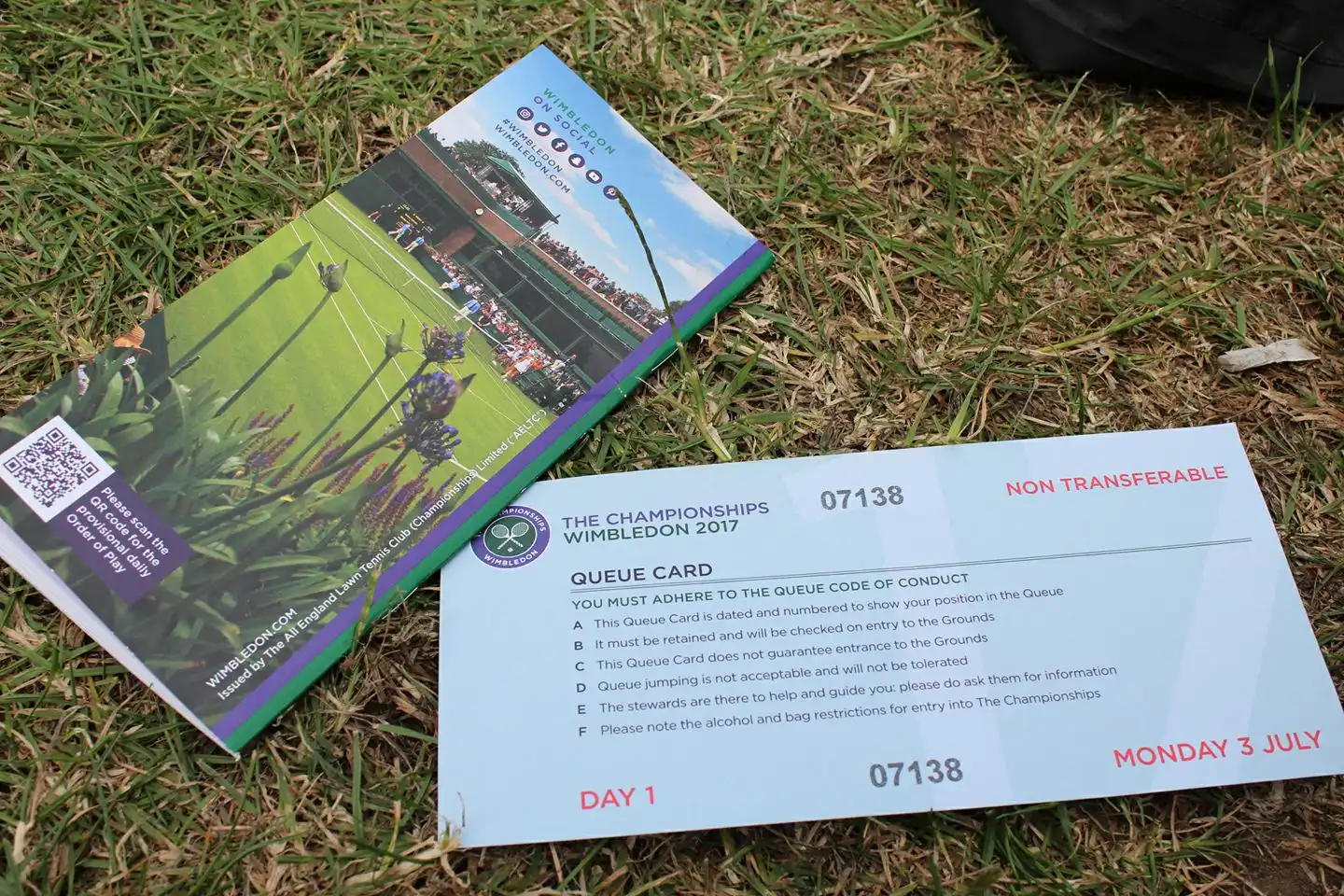
Once you join, a steward issues a numbered, dated Queue Card. That card is what holds your place. It is non-transferable, it can be checked at any point, and you are expected to remain compliant with the Queue rules while waiting.
On a typical Championships day, the process looks like this:
- People arrive and receive Queue Cards
- Overnight campers stay in Wimbledon Park under the Queue rules
- Stewards wake overnight queuers between 5:30am and 6am
- Larger bags and camping kit go to left luggage
- Ticket sales and entry processing continue towards the 10am Grounds opening
- Outside courts usually start at 11am
- No.1 Court usually starts at 1pm, except on finals weekend when it starts at 11am
- Centre Court usually starts at 1:30pm, except on finals weekend when it starts at 1pm
- From 3pm, returned show-court tickets may become available inside the Grounds
That daily schedule plays a part in your strategy. If you want Centre Court on a big early-round day, the Queue is really an afternoon-or-evening-before decision.
If you just want to get in and watch tennis, the Queue can still make sense much later than that, particularly if your real target is a Grounds Pass rather than a reserved seat.
How Early People Join And Where They Camp
People queue in Wimbledon Park, around a five-minute walk from Southfields Station, and overnight campers stay there under Wimbledon’s formal Queue rules.
Only two-person tents are allowed, one person should remain present at all times, and food deliveries must be collected at the Wimbledon Park Road gate before 10pm. Gazebos, cooking equipment and fires are not allowed.
The biggest practical point is that arrival time depends on your ambition.
If you want Centre Court, the official allocation is only 500 tickets per day when Centre is sold through the Queue.
That is why serious Centre seekers on busy early-round days often arrive the day before, sometimes in the afternoon or early evening. On the busiest days, dawn is far more realistic as a Grounds strategy than a Centre Court strategy.
If you want any show court, your target is broader because the combined daily show-court pool is roughly 1,500 seats when Centre, No.1 and No.2 are all being sold through the Queue.
If you mainly want a Grounds Pass, the Queue is more forgiving, especially later in the fortnight when demand often eases and Grounds prices fall. Even then, demand can spike sharply on opening days, weekends, sunny days and major British-player days.
A recent fan account captures that mixture of planning, uncertainty and payoff quite well:
Wimbledon queue day 2 experience by u/No_Name5867 in wimbledon
That is useful as a lived example, though it should not be treated as a rulebook. The official position is still the anchor. Your Queue Card number, the day’s demand and the morning’s throughput matter more than any one anecdote.
What Tickets You Can Buy In The Queue And What They Let You Do
The Queue can lead to three very different Wimbledon days.
Grounds Pass
A Grounds Pass gets you into the site and lets you watch tennis in unreserved seating on No.3 Court, Court 12 and Court 18, plus a range of outside courts. No.3 Court also has its own internal queue once you are inside.
That means a Grounds Pass is not just a way through the gate. On the right day, especially early in the tournament, it can mean a full schedule of close-up matches, a lot of movement around the grounds, and a better sense of the event as a whole. You also still have access to The Hill, food and drink areas, shops and the 3pm returned-ticket system if you want to try for a later upgrade.
Morning queue show-court ticket
The morning Queue can also sell limited reserved seats for Centre Court, No.1 Court and No.2 Court. Officially, that is 500 for each court on the days those tickets are offered through the Queue. Centre Court and No.2 Court are available in the Queue for the first 10 days only, while No.1 Court has a limited daily allocation throughout the event.
If you are trying to decide whether Centre or No.1 is actually worth targeting, it helps to understand how the courts differ in practice, not just in prestige. A separate guide to the Wimbledon Centre Court seating plan is useful for visualising what those ticket ambitions really mean on the day, while the Wimbledon Court No. 1 seating plan gives the same kind of practical context for No.1 Court.
Returned-ticket resale after 3pm
This is separate from the main Queue. Once you are already inside the Grounds, returned tickets for Centre Court, No.1 Court and No.2 Court may be sold from 3pm, subject to availability.
In 2025, Wimbledon used a virtual queue in the Wimbledon App for this, with fixed prices well below the original show-court seat prices.
That resale layer matters more than many people realise. It means a morning Grounds Pass is not necessarily the end of the story. For flexible visitors, Grounds first and resale later can be one of the smartest public-access strategies available.
What Wimbledon Queue Tickets Cost
For the 2025 Championships, the published pricing looked like this:
- Centre Court: $100 to $418
- No.1 Court: $53 to $279
- No.2 Court: $73 to $133
- Grounds Pass: $40 on Days 1 to 8, $33 on Days 9 to 11, $27 on Days 12 to 14
- Returned tickets after 3pm: $20 for Centre Court and $13 for No.1 Court or No.2 Court
Those figures explain why the Queue attracts such a broad mix of people. A Grounds Pass is the cheapest official route into Wimbledon.
No.1 and No.2 often sit in the middle ground, where you still get a reserved seat without paying Centre Court money. Centre Court is the prestige target, though it is also the smallest and most competitive show-court allocation.
How Quickly The Queue Moves, And How Late You Can Still Join
This is where many Wimbledon guides become too vague. The Queue does not move at one fixed speed, because entry depends on more than your place in line. Security checks, bag searches, left luggage, ticket-sale processing and weather can all slow things down.
On very busy days, the line can become far longer and slower than casual advice suggests. That is why it helps to think in terms of outcomes rather than one magical arrival time.
| Arrival Time | What You May Still Be Able To Buy | Best For | Main Trade-Off |
|---|---|---|---|
| Afternoon or early evening the day before | Best chance of Centre Court, plus strong odds of another show court on full-supply days | Fans who specifically want Centre Court or a reserved seat | Overnight wait, camping rules, weather exposure |
| Late evening to overnight | Often still viable for some show-court hopes, especially beyond Centre Court | Fans happy with No.1 or No.2 as well as Centre | Outcome becomes much less certain on busy days |
| Pre-dawn | Grounds Pass most realistic; reserved-seat hopes can already be weak on major days | Fans who mainly want to get inside | Long wait for a less certain ticket outcome |
| Early morning | Usually a Grounds strategy rather than a Centre strategy | Flexible visitors and outer-court fans | Risk of a partial day and slower-than-expected entry |
| Late morning or later | Sometimes still viable for Grounds only, depending on demand and capacity | People happy with a shorter Wimbledon day | A full day’s value drops sharply, and sell-outs become more likely |
That is the practical answer to the late-arrival question. Yes, it can still be worth joining later in the day for a Grounds Pass on some dates. No, it is not a reliable way to chase Centre Court, and it becomes poorer value if you are only getting in well after outside-court play has already started.
Weather also changes the picture. Good weather can increase demand. Extreme heat can make the wait harder to tolerate. Rain may put some people off joining, though it also lowers the value of a Grounds Pass if outside-court play is badly affected. So weather does not just affect how long the line is. It changes how useful different ticket types are once you get inside.
Queue Vs Resale: When Certainty Counts More Than Price
The Queue is official and usually cheaper. It can also mean camping, limited sleep, bag restrictions, weather exposure and no certainty that the ticket you want will still be there when you reach the sales point.
That is where the resale market becomes a sensible alternative rather than a last resort. For readers who value certainty, want a specific court, or simply do not want to spend half a day or a full night waiting in Wimbledon Park, Ticket-Compare.com can be a practical comparison route.
It is a ticket comparison platform, not a seller, and it brings together tickets listed by pre-vetted resale sites and official ticketing partners, often including hospitality, so fans can compare price and availability in one place and then click through to buy from the relevant provider.
In other words, the Queue works best when you are flexible on comfort and outcome. Resale works better when time, certainty and seat choice matter more than getting the cheapest official route.
Is The Queue Worth It?
For plenty of fans, yes.
It makes the most sense if you are happy to be flexible, you like outer-court tennis, and you see value in getting into Wimbledon without paying resale or hospitality prices. It also makes sense if you can choose your day carefully, arrive early enough for your real objective and accept that a Grounds Pass may be the end result.
It makes less sense if you need a specific show court, cannot deal with overnight waiting, or would be frustrated by spending hours in line and still ending up with a different ticket from the one you had in mind. In those cases, paying more for certainty can be the more rational decision.
Frequently Asked Questions About The Wimbledon Queue
How early should I join the Wimbledon Queue?
That depends on your target. For Centre Court, busy early-round days often require joining the day before because there are only 500 queue tickets for Centre on applicable days. For a Grounds Pass, joining early on the day can still work, though demand can spike sharply on opening days and big weather days.
Can you camp overnight for Wimbledon?
Yes. Wimbledon officially allows overnight queueing in Wimbledon Park, though only two-person tents are permitted and one person should remain present. Gazebos, barbecues, camping stoves and fires are not allowed.
What tickets can you buy in the Wimbledon Queue?
You may be able to buy a limited allocation of Centre Court, No.1 Court or No.2 Court tickets, plus Grounds Passes subject to capacity. After 3pm, returned show-court tickets may also become available inside the Grounds through a separate process.
Does a Grounds Pass let you watch tennis?
Yes. A Grounds Pass gives you access to Wimbledon and unreserved seating on No.3 Court, Court 12 and Court 18, plus multiple outside courts. It does not give you a reserved seat on Centre Court, No.1 Court or No.2 Court.
How much are Wimbledon Queue tickets?
For 2025, published prices ran from $100 to $418 for Centre Court, $53 to $279 for No.1 Court, $73 to $133 for No.2 Court, and $27 to $40 for Grounds Passes depending on the day of the tournament. Returned tickets after 3pm were $20 for Centre Court and $13 for No.1 Court and No.2 Court.
What time does play start at Wimbledon?
The Grounds open at 10am. Outside courts usually begin at 11am, No.1 Court at 1pm except on finals weekend when it starts at 11am, and Centre Court at 1:30pm except on finals weekend when it starts at 1pm.
Can you still join the Queue later in the day?
Sometimes, yes, especially if your goal is a Grounds Pass rather than a reserved show-court seat. The problem is value as much as access. The later you join, the more likely you are to miss a large chunk of outside-court tennis and the less realistic it becomes to treat the Queue as a full-day strategy.
Is resale better than queueing for Wimbledon?
It is better for certainty, not for price. The Queue is the cheaper official route and can be excellent value if you are flexible. Resale is usually more expensive, though it can save you a long wait and give you a better shot at the exact court or session you want.
So, What Is The Queue At Wimbledon Really Best For?
The Queue at Wimbledon is an official, on-the-day way to buy into the Championships, built around patience, timing and flexibility rather than certainty.
It works best for fans who are prepared to wait, who understand the difference between show-court tickets and Grounds Passes, and who can live with the fact that the ticket available may not be the one they first hoped for.
For some people, that trade-off is absolutely worth it.
For others, especially anyone who wants a specific court without the overnight wait or the uncertainty, comparing resale options through Ticket-Compare.com can be the more practical route.
As a comparison platform, we show ticket listings from pre-vetted sellers and official partners in one place, saving you from checking multiple sites by hand.
In realtime, Ticket-Compare.com has thousands of Wimbledon tickets available, with prices starting at $929 for debenture tickets


