

 English


Why FIFA Isn’t Releasing All World Cup 2026 Tickets at Once
Written by Aviran Zazon
FIFA is not releasing all World Cup 2026 tickets in a single drop because the tournament does not run with a fixed pool of seats ready to sell from day one.
Instead, ticket availability for the tournament is managed in stages, with inventory changing as the tournament takes shape.
For supporters, that often feels confusing. You might check the official FIFA platform and see limited availability, only for new tickets to appear later. Many fans may prefer to source tickets from an aggregator like Ticket-Compare.com, which displays tickets across multiple pre-vetted resale sites.
The reality is that FIFA runs a phased system governed by logistics, allocations, pricing decisions and a constantly shifting supply of seats.
Understanding that system, and how it differs from what you might see on the wider market, makes it much easier to navigate the process.
Compare In One Place
Mexico vs South Africa
FIFA World Cup・Estadio AztecaCiudad de México, Mexicofrom $3,2573,588 available ticketsSouth Korea vs Czech Republic
FIFA World Cup・Estadio AkronZapopan, Mexicofrom $5092,229 available ticketsCanada vs Bosnia And Herzegovina
FIFA World Cup・BMO FieldToronto, Canadafrom $2,0082,025 available ticketsUnited States vs Paraguay
FIFA World Cup・SoFi StadiumInglewood, United Statesfrom $1,4292,552 available tickets
The Short Answer: How FIFA’s Phased Ticket System Works
FIFA has sold World Cup 2026 tickets in several phases rather than all at once.
In practice:
- Early phases use random draws and ballots
- Later phases shift toward first-come, first-served sales
- The final phase (from April 2026) sells tickets seat-by-seat
- Tickets are not always visible or continuously available
So availability changes as:
- Seats are released
- Allocations are confirmed
- Tickets return via resale
FIFA remains the primary seller, but it is not the only way fans track availability. Because releases are staggered, many supporters monitor both FIFA’s platform and the broader resale market to understand what is actually on offer at any given time.
Why FIFA Releases World Cup 2026 Tickets In Phases
Inventory changes throughout the tournament build-up
A World Cup stadium is not a finished seating map months in advance. Capacity shifts as:
- Broadcast infrastructure is installed
- Security perimeters are finalised
- Hospitality areas are built
- Accessibility seating is configured
FIFA itself acknowledges that net capacity can change, which means some seats simply do not exist as sellable inventory early on.
The tournament itself was finalised in stages
World Cup 2026 introduces a 48-team format across 16 venues.
That creates timing dependencies:
- The World Cup Draw in December 2025 determined matchups
- Some teams were confirmed later via playoffs
Certain tickets of course depend on a team qualifying or a team advancing
Supporter tickets and team-specific packages cannot be fully defined until those steps are complete.
Not all tickets belong to the general public pool
It’s important to remember that a big portion of tickets is allocated outside standard sales.
These include:
- National association supporter allocations
- Hospitality packages sold by official partners
- Travel bundles linked to flights and accommodation
Each of these channels operates on its own timeline, which means public availability never reflects the full inventory.
Pricing and demand are managed over time
Demand for World Cup tickets is exceptionally high, with hundreds of millions of requests recorded in early phases. With dynamic pricing, demand has pushed the price of World Cup final tickets into the thousands already.
Rather than committing all inventory upfront, FIFA:
- Releases tickets gradually
- Observes which matches attract the most demand
- Adjusts pricing across phases
In the last-minute World Cup ticket sales phase, seats are priced individually, so two tickets in the same category may cost different amounts depending on location.
The resale marketplace keeps supply fluid
FIFA’s official resale and exchange platform runs alongside primary sales.
That means:
- Tickets sold earlier can return to the market
- Availability changes continuously
- Fans may see new options appear close to matchday
This makes the ticket system dynamic even after initial sales have ended.
What The Different Ticket Routes Have Looked Like
| Ticket Route | When It Typically Appears | How It Works | Who Can Use It | Restrictions / Friction |
|---|---|---|---|---|
| Early Draw Phases | Sep 2025 – Jan 2026 | Ballot-based allocation | Registered FIFA users | No guarantee of success |
| First-Come Sales | Later phases | Queue-based purchase | General public | High competition |
| Last-Minute Phase | From April 2026 | Seat selection on a map | General public | Inventory changes constantly |
| Supporter Allocations | Throughout | Via national associations | Eligible fans | Strict eligibility rules |
| Hospitality Packages | Ongoing | Premium ticket bundles | Anyone | Higher pricing |
| FIFA Resale Marketplace | Oct 2025 onward | Tickets resold within FIFA system | Buyers and sellers | Fees and timing limits |
Why The System Feels So Broken Up To Fans
From a supporter’s perspective, the process rarely feels linear.
You might:
- Enter a sale window and see nothing available
- Return later and find tickets for the same match
- Notice different prices across phases
- See only part of the tournament accessible at once
That uncertainty shows up regularly in fan discussions:
Are they releasing more tickets or were these all the ones left? by u/ZAR_2402 in WorldCup2026Tickets
The answer is that availability is not fixed. FIFA’s system is designed so tickets can appear later, whether through new releases, allocation changes, or resale activity.
Secondary Market Compared To FIFA Releases
Because FIFA releases tickets in stages, the official platform does not always show the full picture at any given moment.
So, for fans wondering where to buy FIFA World Cup tickets, right now there are 181,774 tickets available on Ticket-Compare.com.
Ticket-Compare.com is a comparison platform rather than a seller. It gathers listings from vetted resale sites and official hospitality partners, allowing fans to view different options side by side without opening multiple tabs.
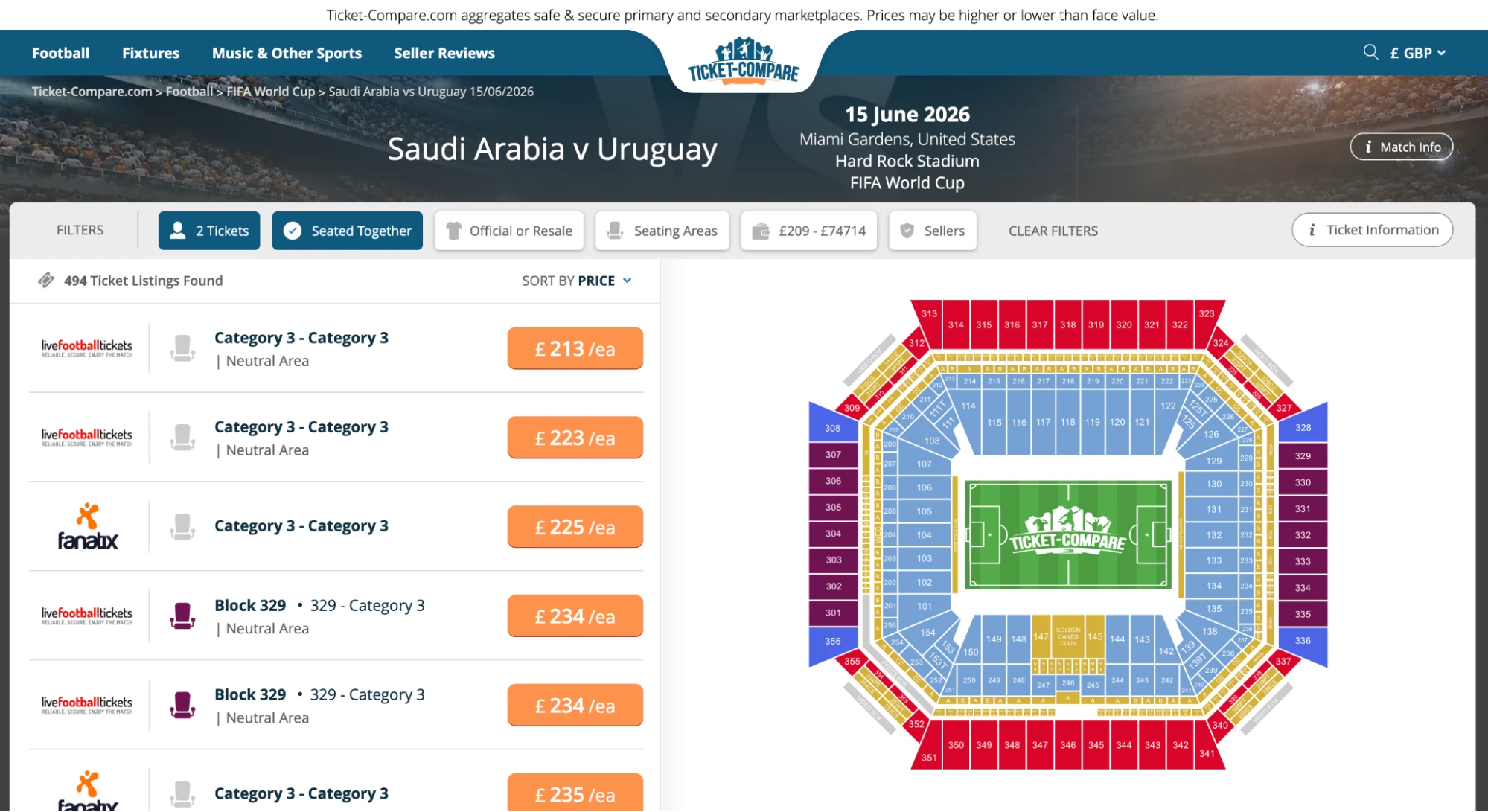
Prices for World Cup 2026 tickets currently start at $379, and that price depends on the matchup and where you choose to sit.
This is important because:
- Tickets may be visible on Ticket-Compare.com even when FIFA releases are paused
- Availability reflects real-time market movement
- Seating details are often much clearer
For many supporters, checking both FIFA and a comparison platform becomes a practical way to understand what is genuinely available.
World Cup 2026 Ticket Releases Explained | Frequently Asked Questions
Why doesn’t FIFA release all tickets at once?
Because ticket inventory is not fixed and depends on stadium setup, team qualification, and allocation channels.
Will more tickets be released later?
Yes. FIFA has confirmed rolling releases, including during the tournament.
Are tickets always available on the FIFA site?
No. Availability is not continuous and can change at any time.
Is there an official resale option?
Yes. FIFA operates a resale marketplace where tickets can be bought and sold.
Why do tickets reappear after selling out?
Because additional inventory may be released or tickets may return via resale.
Why do fans check Ticket-Compare.com?
To see a broader range of available tickets across resale platforms and hospitality listings in one place.
Why Isn’t FIFA Releasing All World Cup 2026 Tickets At Once?
FIFA is managing a live, evolving inventory rather than selling from a fixed pool of seats.
Stadium layouts change, teams qualify at different times, supporter allocations need to be protected, and tickets continue to circulate through resale. Releasing everything at once would remove the flexibility needed to manage those moving parts.
At the same time, this phased system means availability is never fully visible in one place.
That is why many supporters combine FIFA’s platform with tools like Ticket-Compare.com, which make it easier to compare what is already on the market across different sources.
Once you see the World Cup ticket system as something that evolves right up to matchday, the staggered release approach starts to make much more sense.
Related Articles:
How to Get $60 Tickets for the World Cup
Why Are World Cup 2026 Tickets So Expensive?
How To Transfer FIFA World Cup Tickets


