

 English








World Cup Ticket Prices: Qatar 2022 vs 2026 — How Costs Have Changed
Written by Aviran Zazon | Last updated on January 6, 2026
As fans make sense of the World Cup 2026 draw and the process of buying tickets, from lottery to resale, a question keeps coming up:
How do these ticket prices compare to Qatar 2022?
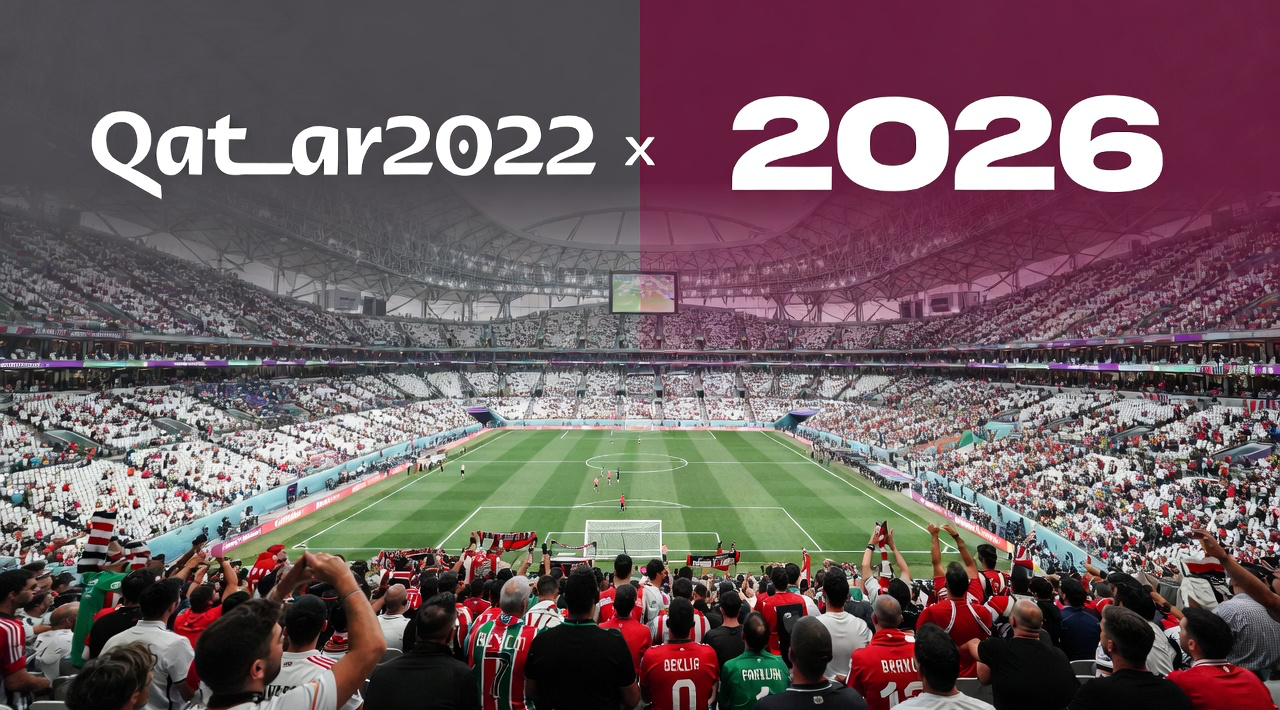
By our calculations, 2026 tickets are currently between five and twenty times more expensive than comparable tickets at Qatar in 2022. And these are only base-level guide prices, with dynamic pricing creating scope for even greater increases.
On the surface, both tournaments are run by FIFA using similar ticketing rules. In practice, however, the World Cup 2026 represents a seismic shift. This applies not just to price levels, but in how these football tickets are sold, handled, valued and experienced.
Between a range of factors like the expanded 48-team format, dynamic pricing, three host countries and 16 host cities, the cost of attending the World Cup has changed in ways far more complex than simple inflation.
This article breaks down official prices, market behaviour and geography, comparing Qatar 2022 with World Cup 2026 to help fans understand what’s different, and just why that is.
Compare for the cheapest deals!
Official Ticket Prices: Qatar 2022 vs World Cup 2026
Let’s jump in with a comparison between prices for the two tournaments. Right away, it’s easier to nail down the ranges for Qatar 2022 because it used static pricing, unaffected by demand.
Qatar 2022 Official Ticket Prices
At Qatar 2022, prices ranged from as little as $11 to as much as $1,607 for general admission tickets.
FIFA used the four-category fixed pricing system, which had been in place for multiple tournaments. There were notably low entry price-points, both for local and international fans.
Qatar 2022 (official prices, USD)
| Match Stage | Cat 1 | Cat 2 | Cat 3 | Cat 4 |
|---|---|---|---|---|
| Opening Match | $618 | $440 | $302 | $55 |
| Group Stage | $220 | $165 | $69 | $11 |
| Round of 16 | $275 | $206 | $96 | $19 |
| Quarter-Final | $426 | $288 | $206 | $82 |
| Semi-Final | $956 | $659 | $357 | $137 |
| Third-Place | $426 | $302 | $206 | $82 |
| Final | $1,607 | $1,003 | $604 | $206 |
Again, you’ll notice the standout figure in that table is the $11 Category 4 group-stage ticket. This made Qatar 2022 one of the most accessible World Cups in recent history for fans willing to sit in the less coveted seats (high in corners or behind the goals).
World Cup 2026 Official Price Ranges
World Cup 2026 will move away from fixed pricing into dynamic pricing, meaning tickets adjust based on demand, timing and the profile of the match in question. However there are minimum guide prices.
World Cup 2026 (indicative price ranges, USD)
The table below shows estimated minimum and typical maximum prices for FIFA World Cup 2026 tickets, based on official pricing ranges and early secondary market behaviour.
| Match Stage | Official Price Range (USD) | Typical Secondary Market Range (USD) |
|---|---|---|
| Group Stage | $60 to $620 (Host nation matches can be higher) | $150 to $1,000+ |
| Round of 32 | $105 to $750 | $500 to $4,000+ |
| Round of 16 | $170 to $980 | $750 to $5,000+ |
| Quarter-Finals | $275 to $1,775 | $1,000 to $10,000+ |
| Semi-Finals | $420 to $3,295 | $1,500 to $25,000+ |
| Third Place Match | $165 to $1,000 | $500 to $10,000+ |
| Final | $4,185 to $8,680 ($60 supporter tickets available in very limited numbers) | $4,000 to $50,000+ |
- Note that upper price limits were estimates at the time of writing
In the face of some criticism, FIFA has introduced a lower-priced Supporter Entry Tier around the $60 mark.
However, for this tier availability is limited to as little as 1% of stadium capacity, and only available through national associations, with strict qualification criteria.
To put it simply: You can’t buy these tickets unless you’ve attended multiple matches for your national team.
In practice, many fans will encounter much higher prices, especially when it comes to the marquee fixtures.
2022 vs 2026: Key World Cup Pricing Differences at a Glance
1. Cheapest Tickets Are No Longer Truly “Cheap”
At Qatar 2022, those $11 group-stage tickets were widely available early on. For 2026, even the lowest-priced general tickets start at around $60, a five-to-six-fold increase before travel or accommodation is considered. And that is before we consider the scarcity of these low-priced seats.
2. Premium Prices Have Exploded
The most expensive Qatar 2022 tickets peaked around $1,600 for the final. In contrast, World Cup 2026 final tickets are already reaching five-figure sums well above that, particularly on secondary markets.
3. Dynamic Pricing Changes Everything
Qatar’s prices were predictable and set in stone. In contrast, 2026’s dynamic prices are fluid, rising or falling with demand. This introduces uncertainty for fans and creates much wider spreads between the cheapest and most expensive tickets for the same match stage.
City-by-City: Why Geography Counts More in 2026
One of the most overlooked factors differing between 2022 and 2026 is little to do with categories, but rather where matches are played.
Qatar 2022: One City with Short Distances
All eight Qatar 2022 stadiums were clustered around Doha, and easily reached by an integrated public transport system.
Fans could attend multiple matches in a single day without flights, long journeys or overnight stays in different cities.
This compact setup:
- Reduced overall travel costs
- Made lower-priced tickets more viable
- Allowed fans to prioritise matches over logistics
World Cup 2026: Three Countries and 16 Cities
World Cup 2026 spans:
- Eleven cities in the USA
- Three cities in Mexico
- Two cities in Canada
Host cities range from global hubs like New York/New Jersey, Los Angeles and Mexico City, to smaller markets such as Kansas City, Philadelphia and Monterrey, which all have a fervid local supporter base.
This geographic spread naturally has giant consequences:
- Long-haul flights between matches
- Hotel prices that will vary massively by city
- Rather dramatic time zone changes affecting kick-off times and travel plans
For many fans, a “cheap” ticket in isolation may still be expensive once flights and accommodation are factored in.
How Cities Influence World Cup 2026 Ticket Prices
Ticket demand in 2026 is already showing some strong city-based patterns:
- New York/New Jersey (Final venue): Consistently among the highest prices
- Los Angeles & Miami: Strong international demand and large diasporas with high resale premiums
- Mexico City (Estadio Azteca): Historic venue, driving prices at the upper end
- Toronto & Vancouver: Novelty factor for Canada’s first men’s World Cup matches
- Mid-market US cities: Often better value, but less convenient for international travel
Unlike Qatar, where ticket value was mostly tied to match importance, we’ve noticed that 2026 pricing is heavily affected by location.
Secondary Market Impact on World Cup 2026 Prices
We’ve noticed that secondary markets for World Cup 2026 tickets have become far more volatile than in 2022. This is due to:
- Dynamic pricing
- City-based demand differences
- Massive travel distances
- “Blind” ticket purchases in the early sale and pre-sale before the draw
High-profile matches in major cities are commanding significant premiums, while less convenient fixtures can fluctuate sharply as fans reassess travel feasibility. We’ll talk about potential price falls a little later in this article.
What This Means for Fans
Comparing Qatar 2022 with World Cup 2026 highlights a clear shift:
- Tickets are more expensive at every level
- Prices are less predictable
- Location matters as much as the match
- Travel costs are now a core part of the ticket decision
For fans planning to attend, ticket price is no longer the main cost, as it’s part of a broader calculation involving flights, accommodation, timing and geography.
Can World Cup 2026 Ticket Prices Go Down?
As we’ve covered, one of the biggest differences between World Cup 2026 and previous tournaments is FIFA’s use of dynamic pricing.
While this has pushed prices up for high-demand matches, it also means prices are not fixed, and in some cases, they can even fall.
Dynamic pricing for events works by adjusting ticket prices according to demand rather than freezing them in static categories.
If interest is high, prices rise. If demand is weaker, prices can stabilise or drop over time. This model is common in airline tickets and major live events, but it’s new territory for the World Cup.
Lessons from the 2025 FIFA Club World Cup
FIFA effectively tested this pricing approach at the FIFA Club World Cup 2025, which was also held in the United States.
While headline fixtures involving major European clubs sold quickly and at higher prices, less attractive match-ups struggled to generate demand.
Games featuring unfamiliar teams, neutral venues, or limited local interest saw prices fall significantly as kick-off approached. In some cases, tickets dropped well below initial face value simply to ensure seats were filled.
That tournament showed an important reality of demand-based pricing: when fans don’t bite, prices have to adjust.
A 2025 Club World Cup Example: When Demand Didn’t Materialise
During the 2025 Club World Cup, several group-stage matches involving lesser-known clubs struggled to attract crowds, particularly when they were scheduled midweek or in large NFL stadiums.
One example, to choose from many, was a Group F match between Fluminense and Borussia Dortmund at the MetLife Stadium (34,276 attended in a 82,500-capacity stadium).
Objectively, these are two large clubs, including 2023’s Copa Libertadores winner (Flu) and the 2024 Champions League finalist (BVB).
And yet, with neither club attracting a massive travelling fanbase in North America, demand was limited. As a result:
- Official ticket prices were reduced close to kickoff
- Secondary market listings dropped well below early face-value expectations
- Some tickets were available for well under $30 on the secondary market
This was a classic example of demand colliding head-on with the reality of the event. When a matchup doesn’t resonate with the local market, the price will adjust suddenly.
What This Means for World Cup 2026
The World Cup is obviously a much bigger event than the Club World Cup. Demand will be higher overall, and sell-outs are more likely.
This will apply especially for host nation matches, knockout games, and fixtures involving global stars. That said, not every World Cup match carries the same appeal or will have an easy supply of fans.
As the tournament unfolds, there will almost certainly be:
- Dead rubber group matches where qualification is already decided
- Neutral fixtures between teams with smaller travelling support
- Early kick-off matches on weekdays in less reachable host cities
- Round of 32 or Round of 16 games featuring less commercially attractive pairings
For these matches, demand may be lower. This is especially true once fans’ travel plans, budgets, and priorities become clearer.
Under a dynamic pricing model and with plenty of tickets likely to be relisted on the secondary market, this creates room for prices to come down.
Why Patience Can Sometimes Pay Off
In previous World Cups with fixed pricing, a ticket either sold out or didn’t, with no effect on pricing. In 2026, FIFA and secondary markets are both reacting to live demand.
That means:
- A ticket priced high today isn’t guaranteed to stay high
- Unsold inventory may be repriced closer to kick-off
- Secondary market sellers may lower prices if demand doesn’t materialise
This doesn’t mean fans should expect bargains across the board. High-profile matches are unlikely to drop meaningfully. But for flexible travellers who aren’t chasing marquee fixtures, waiting can sometimes unlock better value.
The Key Trade-Off for Fans
Dynamic pricing introduces a balance every buyer has to consider:
- Certainty vs value: Buy early and get that quick peace of mind, or wait and risk availability for a potential price drop
For fans targeting specific teams or must-see matches, early purchase is often the safer route. For those open to locations, matchups, and timings, the 2026 pricing model may reward patience.
Things may change even more dramatically once the group stage begins and demand patterns become clearer.
In short, while World Cup 2026 prices are higher overall, dynamic pricing doesn’t only move in one direction. Just as it inflates prices for big games, it also creates opportunities where interest fades.
Smart and flexible fans may find better deals at these points.
Turkey vs Romania
FIFA World CupIstanbul, Turkeyfrom $24178 available ticketsWales vs Bosnia And Herzegovina
FIFA World Cup・Cardiff City StadiumCardiff, Walesfrom $28736 available ticketsSlovakia vs Kosovo
FIFA World Cup・Tehelné poleBratislava, Slovakiafrom $6775 available ticketsPoland vs Albania
FIFA World Cup・Stadion NarodowyWarsaw, Polandfrom $108371 available tickets
Final Thoughts: World Cup 2022 vs 2026 Ticket Prices
Qatar 2022 was unusually accessible, compact and predictable. Meanwhile, World Cup 2026 is bigger, broader and way more complex. That complication, along with the introduction of dynamic pricing, is helping to drive a dramatic rise in ticket prices.
Still, as we've shown above, dynamic pricing means there may be opportunities for bargains in the right circumstances.
With some two million tickets already sold for the World Cup, not every one of these tickets will be in extreme demand if they’re resold, either on secondary market sites, or on FIFA’s own exchange/resale platform.
This is where a site like Ticket-Compare.com can help. We carry out an instant comparison of all of the learning secondary markets, to help you find the cheapest possible tickets in the locations that suit you best.
As of today, we have 161,631 World Cup tickets in stock, with prices starting from $50 right now.
A World Cup match in huge demand at the moment is Poland vs Albania at $81 but there are still tickets available on our platform!


